Physical Human-Robot Interaction
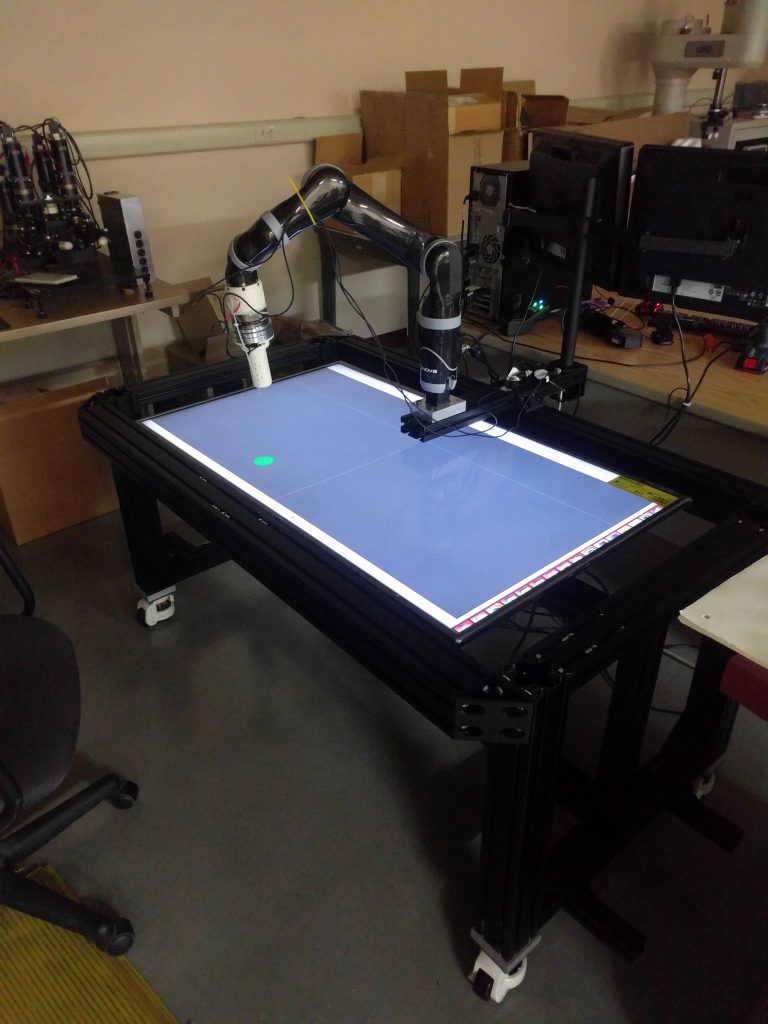
The REACH lab is involved in a number of projects related to physical human-robot interaction. We have investigated hybrid actuation approaches and controls for the purposes of achieving higher performance while maintaining safety through a low output impedance. We have also developed methods that enable robots to learn about the constraints of physical tasks by learning from demonstrations using instrumented tools (e.g., tongs with force-torque sensors to measure interaction wrenches). As part of a NASA University Leadership Initiative project, we have developed shared autonomy methods where an operator provides informed real-time corrections to the robot while it completes contact-rich tasks, such as sanding or polishing. The research results have applications in industrial manufacturing and novice interactions with robots.
Faculty:
- Michael Zinn – Department of Mechanical Engineering, University of Wisconsin–Madison
- Bilge Mutlu – Department of Computer Sciences, University of Wisconsin – Madison
- Michael Gleicher – Department of Computer Sciences, University of Wisconsin – Madison
- Robert Radwin – Department of Industrial and Systems Engineering, University of Wisconsin – Madison
Collaborator(s):
- Rich Gardner – Boeing Research & Technology
- Chris Reid – Boeing Research & Technology
Students:
- Mike Hagenow
- Bolun Zhang
- Megh Doshi
- Patrick Dills
- Guru Subramani
Funding:
- National Science Foundation (NSF)
- NASA University Leadership Initiative (ULI)
- Wisconsin Alumni Research Foundation (WARF)
Shared Autonomy
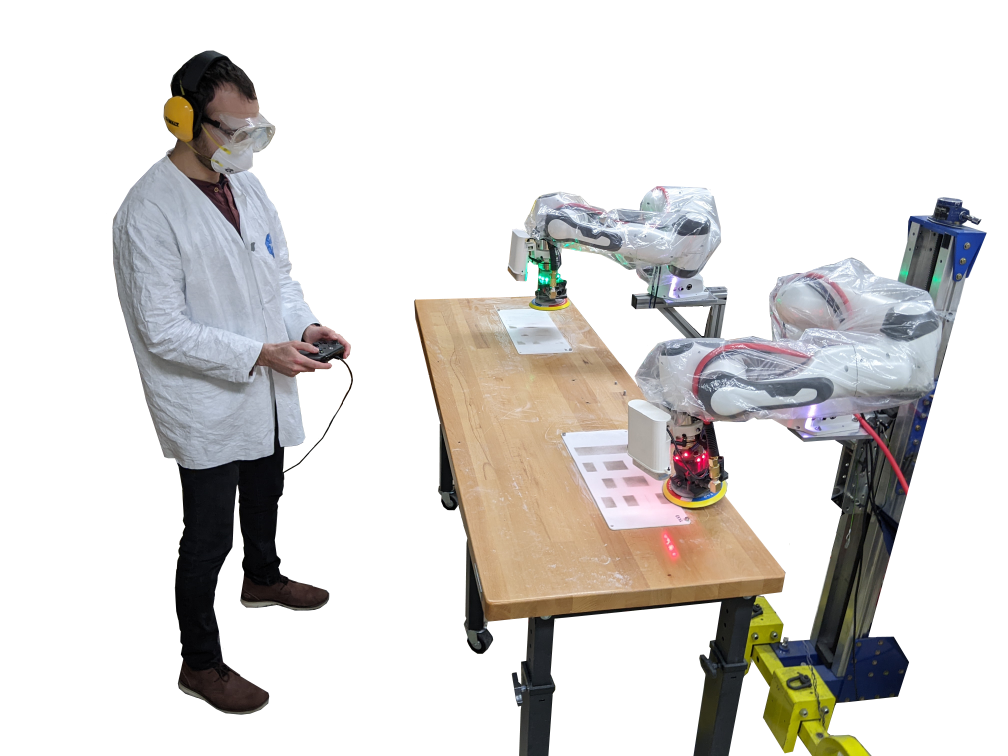
We have developed methods that allow a person to share autonomy with robots completing physical tasks.
Motor Skills Assessment
We are developing robot methods to evaluate motor skills with a focus on autism spectrum disorder.
Macro-Mini Actuation
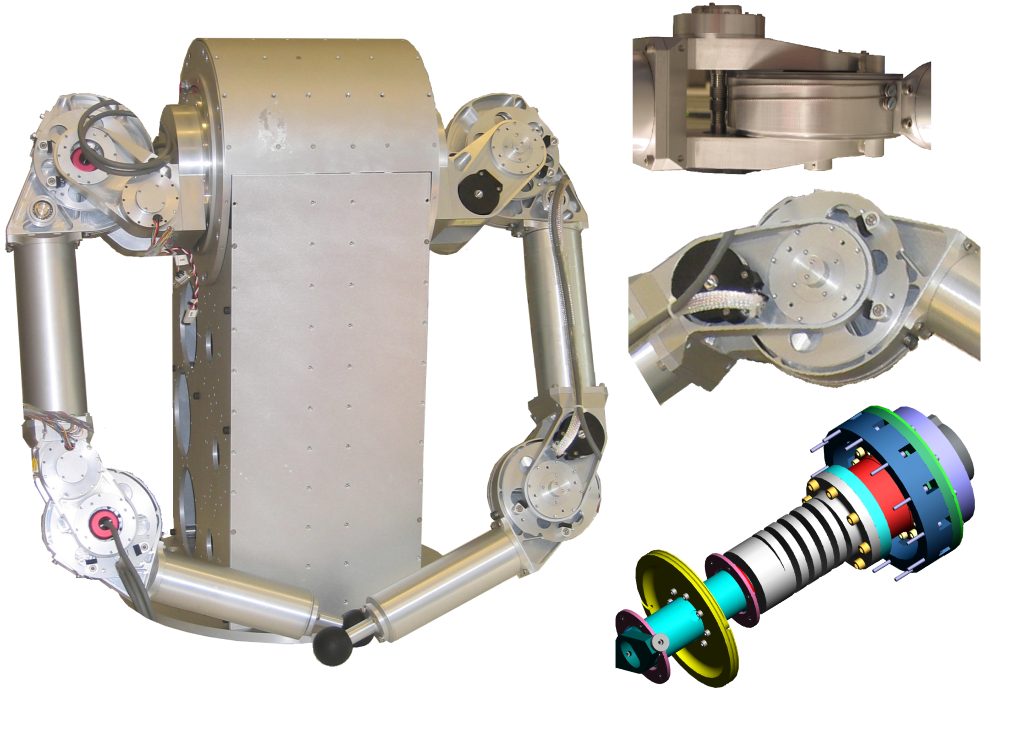
Our lab has developed macro-mini actuation approaches that allow high-force and high-power manipulators.
Instrumented Tongs
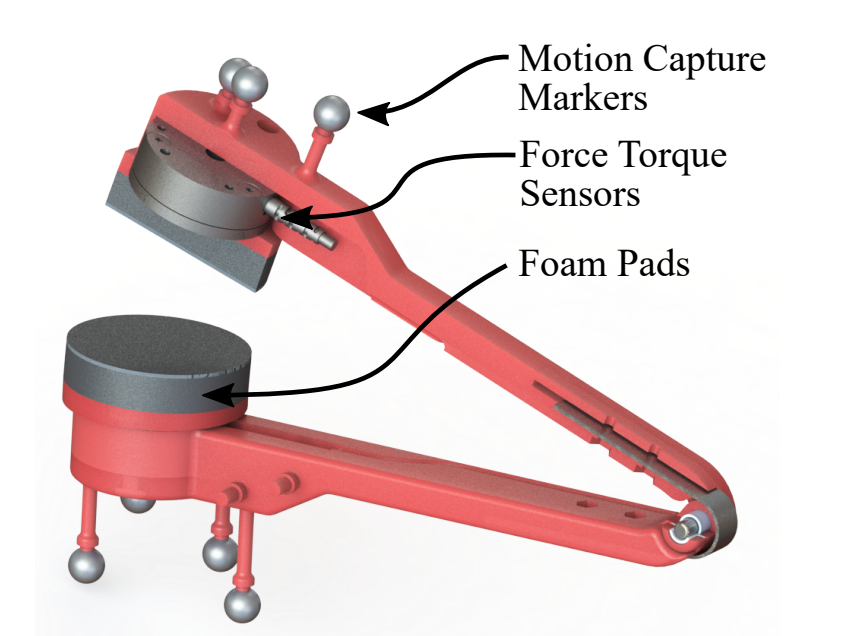
We develop Learning from Demonstration (LfD) interfaces that enable capture of interaction wrenches.
Publications
Senft, E., M. Hagenow, P. Praveena, R. Radwin, M. Zinn, M. Gleicher, and B. Mutlu. “A Method For Automated Drone Viewpoints to Support Remote Robot Manipulation”. 2022 IEEE/RSJ International Conference on Intelligent Robots and Systems (IROS), 2022, pp. 7704-11.
Hagenow, M., E. Senft, E. Laske, K. Hambuchen, T. Fong, R. Radwin, M. Zinn, M. Gleicher, and B. Mutlu. “Registering Articulated Objects With Human-in-the-Loop Corrections”. 2022 IEEE/RSJ International Conference on Intelligent Robots and Systems (IROS), 2022, pp. 2343-50.
Hagenow, M., E. Senft, R. Radwin, M. Gleicher, B. Mutlu, and M. Zinn. “Corrective Shared Autonomy for Addressing Task Variability”. IEEE Robotics and Automation Letters, Vol. 6, no. 2, 2021, pp. 3720-7.
Hagenow, M., E. Senft, R. Radwin, M. Gleicher, B. Mutlu, and M. Zinn. “Informing Real-Time Corrections in Corrective Shared Autonomy Through Expert Demonstrations”. IEEE Robotics and Automation Letters, Vol. 6, no. 4, 2021, pp. 6442-9.
Hagenow, M., M. Gleicher, B. Mutlu, B. Zhang, and M. Zinn. “Recognizing Orientation Slip in Human Demonstrations”. 2021 IEEE International Conference on Robotics and Automation (ICRA), 2021, pp. 2790-7.
Dills, P., A. Dawson-Elli, K. Gruben, P. Adamczyk, and M. Zinn. “An Investigation of A Balanced Hybrid Active-Passive Actuator for Physical Human-Robot Interaction”. IEEE Robotics and Automation Letters (RAL), 2021, p. 8.